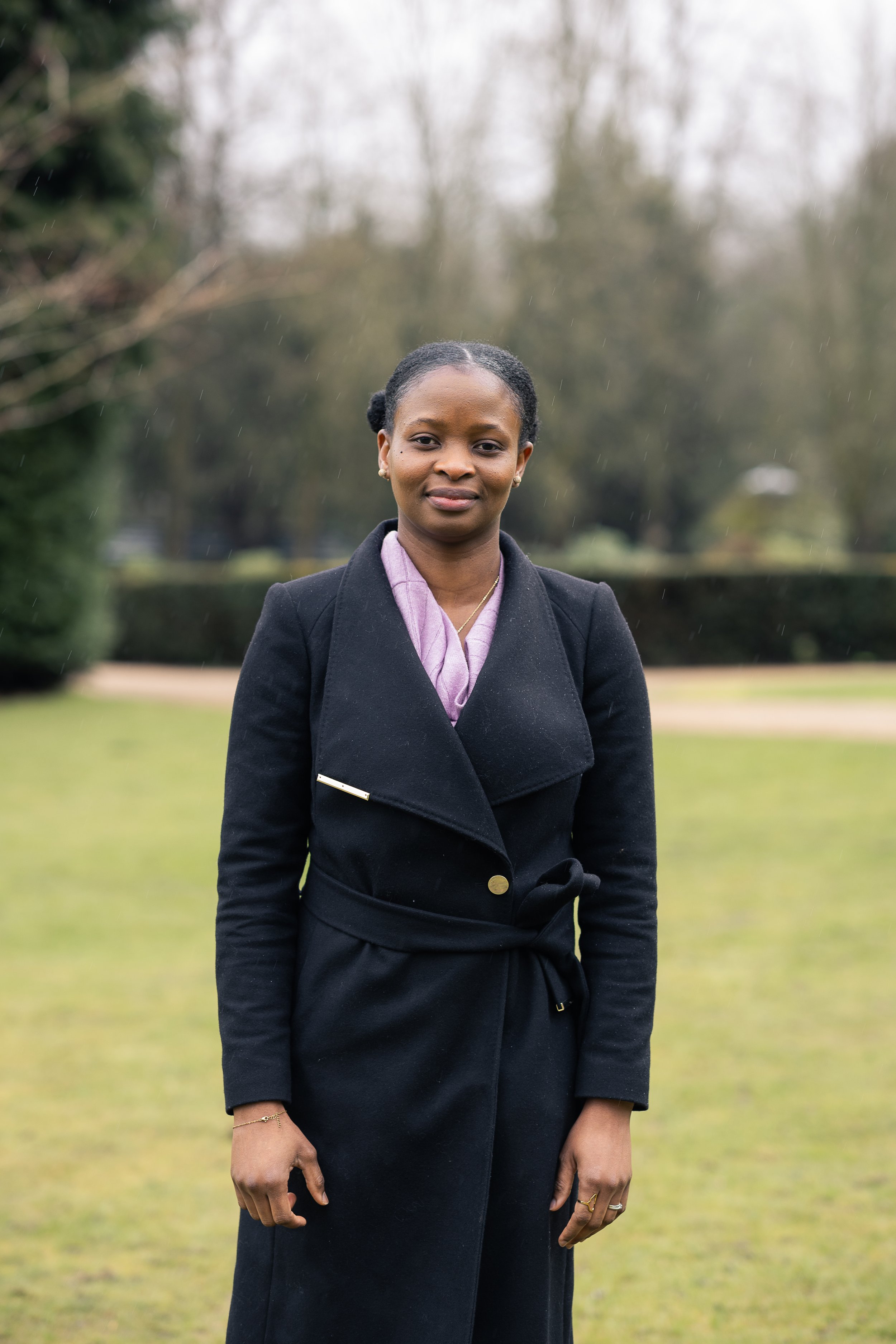
“I began my career supporting children and young people who were not succeeding within traditional educational models and advocating to prevent their exclusion from school. That early work continues to shape my approach today: centring voice, challenging institutional barriers, and creating environments where people are genuinely able to belong and flourish.
I later became the BAME (Black, Asian and Minority Ethnic) Project Lead at the University of Northampton, where I led significant research into the experiences of racially minoritised students. Through this work, I developed a reputation for combining rigorous qualitative research with practical institutional transformation.
I have also worked as a university lecturer and am an Associate Fellow of the Higher Education Academy.
As a researcher, my work focuses on racialised institutional cultures, belonging, student experience, inclusion, and anti-racist organisational change. ”
‘Teleola was Research Lead for the Living Black at University report published by Unite in 2022 and is co-editor of the forthcoming collection Living “Black at University”: Antiracist Praxis Beyond the Curriculum (2026).
Her publications also include: “Why is it my problem if they don’t take part?” The (non)role of white academics in decolonising the law school, which features as a chapter in Professor Foluke Adebisi’s book Decolonisation and the Law School: Dreaming Beyond Aesthetic Changes to the Curriculum(2025, Routledge)
What distinguishes Teleola’s work is the combination of:
research expertise
lived experience
institutional insight
and relational practice.
She does not deliver generic, off-the-shelf training. Every project begins with listening.
Through interviews, focus groups, institutional conversations, and qualitative research, she works to understand:
student experience
Black staff experience
organisational culture
institutional barriers
and the realities behind policy language and diversity statements.
This enables her to create bespoke consultancy, training, and development work tailored to the specific needs, tensions, and cultures of each institution or organisation.
Her work is grounded in the belief that meaningful inclusion cannot be achieved performatively. It requires institutions willing to engage honestly with power, culture, trust, and structural inequality.
Increasingly, her work explores how organisations can move beyond symbolic commitments to diversity and towards genuinely humanising, accountable, and anti-racist institutional cultures.